The Ultimate Guide to Sales Follow-Up Automation in 2026
What is sales follow-up automation?
Sales follow-up automation is the process of using intelligent software to automatically execute and track customer touchpoints across multiple channels—such as email, WhatsApp, and AI voice calling. It ensures immediate lead response times, eliminates manual data entry for sales representatives, and prevents valuable inbound opportunities from falling through the cracks.
Most growing businesses operate under a massive misconception: they believe they have a lead generation problem. They pour budget into Meta ads, SEO, and outbound prospecting, only to watch conversion rates stagnate.
The reality? They have a sales follow-up problem.
When a prospective buyer fills out a form, their intent is at its absolute peak. If your sales team waits 30 minutes to make the first phone call or send the first email, that prospect has already engaged with three of your competitors. In 2026, manual follow-ups are no longer just inefficient—they are a direct pipeline leak.
This guide breaks down exactly how to transition your team from manual, spreadsheet-heavy processes to a unified, omnichannel sales follow-up automation strategy.
The Hidden Cost of Manual Sales Follow-Ups
Relying on human memory, manual CRM updates, and isolated communication tools limits how fast and how consistently your business can grow. Manual outreach breaks down under pressure in two specific ways:
The 60-Second Rule
In B2B and high-ticket sales, speed to lead is the primary differentiator. If an inbound lead is not engaged within the first 60 seconds of registration, the likelihood of qualifying that lead drops exponentially. Human sales development representatives (SDRs) simply cannot monitor inbound pipelines, draft emails, and dial phones fast enough to hit a 60-second benchmark consistently.
The Fragmented Tool Problem
Even when teams attempt to automate, they often do it in silos. They buy one tool for cold email sequences, a separate subscription for WhatsApp broadcast marketing, and a disconnected cloud telephony system for voice calls. This software sprawl forces sales reps to copy-paste context between three different windows. It leads to data loss, duplicate messaging, and poor campaign monitoring.
The Core Channels of a Modern Automated Follow-Up Strategy
To build a follow-up system that actually converts, you must meet buyers where they are. In the modern sales landscape, a single-channel approach is insufficient. A robust sales follow-up automation system integrates three core channels:
1. Professional Email Sequences
Email remains the foundational channel for B2B communication. It is where formal proposals, detailed product sheets, and meeting calendar links belong. Automated email sequences ensure that your brand stays in the prospect's inbox over weeks or months, delivering educational value without requiring manual follow-up from a rep.
2. High-Velocity WhatsApp Automation
While email provides structure, WhatsApp provides speed. WhatsApp business automation boasts open rates that dwarf traditional email. It is the ideal channel for immediate lead acknowledgment, quick qualification questions, and appointment reminders. However, WhatsApp should not exist in a vacuum; it must be tied directly to the central CRM timeline to give sales reps full visibility into the conversation history.
3. AI Voice Calling and Qualification
The most significant leap in sales automation for 2026 is the integration of AI voice agents. Instead of forcing human reps to make hundreds of cold qualification dials to sift through junk leads, AI calling systems automatically dial new leads, verify their budget and timeline, and generate searchable line-by-line transcripts and AI call summaries. Sales leaders can audit interaction quality in seconds without listening to hours of raw call recordings.
How to Build an Omnichannel Sales Sequence
Combining these three channels creates an omnichannel outbound sales machine. Here is how a standard, unified automated workflow should operate:
Step 1: Immediate Inbound Capture
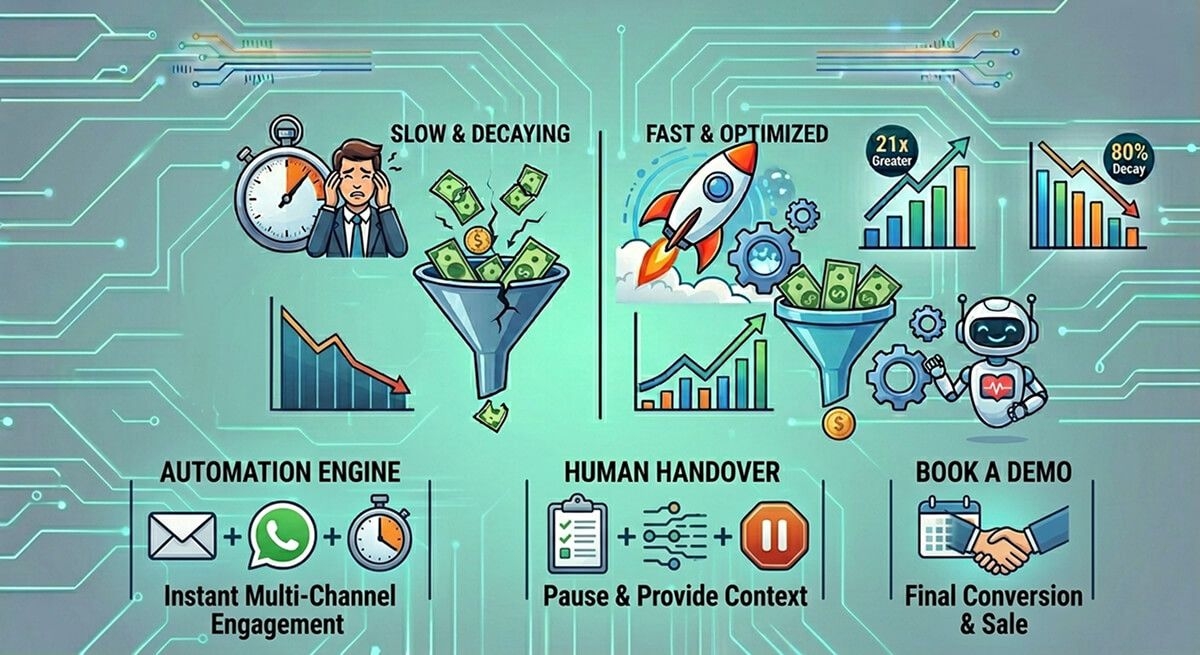
A prospect submits a lead form on your website. Instantly, the sales automation platform triggers an immediate response. Within 60 seconds, the prospect receives a personalized WhatsApp message acknowledging their inquiry, followed simultaneously by an automated AI voice call to qualify their basic requirements (e.g., budget and location).
Step 2: Multi-Channel Nurturing
If the prospect does not answer the call or reply to the text, the system automatically shifts into nurturing mode. It schedules a professional email sequence to deploy over the next five days, interspersed with polite WhatsApp nudges. The communication is persistent but highly coordinated.
Step 3: The Stop-On-Reply Engine
The greatest risk of automated sales sequences is annoying a prospect by messaging them after they have already replied. A modern platform features a built-in cross-channel stop-on-reply engine. If a lead replies to an email, the system instantly pauses all background WhatsApp automation and AI calling tracks, allowing a human sales representative to seamlessly take over the conversation from the centralized dashboard.
Why Single-Channel Automation Leaves Revenue on the Table
If you only automate your emails, you miss the prospects who live on mobile text. If you only use WhatsApp chatbots, you lack the professional medium required to send contracts and handle complex B2B queries. If you only use cloud telephony, you lack the written paper trail needed for effective pipeline management.
By unifying these channels, you eliminate blind spots in your outbound sales campaigns. You gain absolute campaign analytics visibility, knowing exactly which touchpoint resulted in a booked demo.
Replacing Your Tech Stack: Why Consolidation Matters
To execute this level of follow-up automation, businesses historically had to stitch together multiple software platforms using complex Zapier webhooks. This approach is fragile, expensive, and difficult to manage.
The strategic shift for 2026 is tech stack consolidation. Rather than paying for a standalone WhatsApp API provider, a separate cold email tool, and a raw telephony dialer, modern teams are migrating to unified sales workspaces. Consolidating your stack reduces software costs, provides a single chronological timeline for every customer interaction, and drastically improves sales team productivity.
Automate Your Sales Follow-Ups with Rapid Sales
Rapid Sales is built specifically to solve the multi-channel follow-up problem. It is a complete sales and communication automation platform that replaces your fragmented software stack.
With Rapid Sales, you can seamlessly manage high-velocity WhatsApp chats, professional email threads, and advanced AI calling features—including instant call transcripts and automated call summaries—from one unified dashboard. By eliminating response lag and ensuring no lead falls through the cracks, you empower your sales team to focus on closing deals rather than chasing unengaged prospects.
Stop losing warm leads to slow responses. Book a Rapid Sales demo today and see how our unified platform automates your entire lead follow-up process.